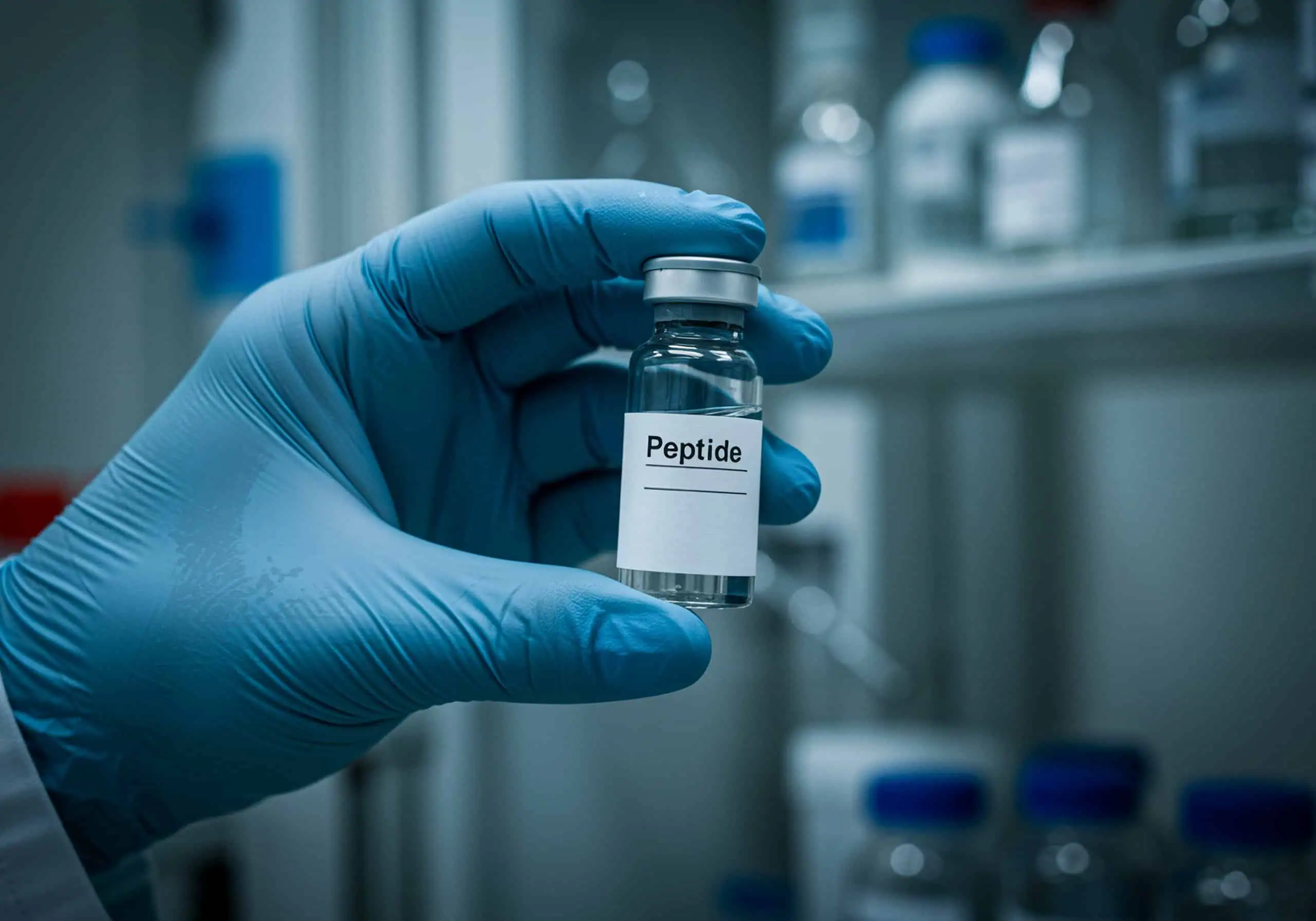
Your body relies on peptides, small chains of amino acids, to send instructions between cells. Targeted peptide therapy aims to support those natural signals.
Our Boston providers build personalized plans with peptides and wellness injectables such as NAD+, always starting with a thorough evaluation and following up closely as you progress.
Each option has a different purpose, and not every peptide is right for every patient. Some are not FDA-approved, so your provider will discuss the evidence, risks, and whether a peptide fits your goals.
Sermorelin
Encourages the pituitary gland to release more of your own growth hormone, which may support sleep, recovery, and body composition.
Tesamorelin
A growth hormone-releasing peptide studied for its effect on abdominal fat. It may be considered as part of a body composition plan.
NAD+ therapy
NAD+ is a coenzyme involved in cellular energy production. Many patients use injections to support energy and mental clarity.
Melanotan II
A synthetic peptide related to the hormone that stimulates skin pigmentation. Your provider will review its risks and limitations in detail.
AOD-9604
A fragment of growth hormone studied for its role in fat metabolism. It may be considered alongside nutrition and exercise.
BPC-157
A peptide studied for its potential role in tissue repair and gut health. Many patients ask about it to support recovery.
TB-500
A synthetic version of a naturally occurring peptide studied for its potential to support healing and flexibility.
PT-141 (bremelanotide)
Acts on the nervous system to support sexual desire. An FDA-approved form is available for certain women.
Copper peptide (GHK-Cu)
A naturally occurring copper complex known for supporting collagen production and skin repair.
MOTS-C
A peptide studied for its role in metabolism and how the body uses energy. Research is ongoing.
Some peptides are commonly paired to support skin, recovery, and repair together.
Copper (GHK-Cu)
Supports collagen and skin renewal.
BPC-157
Studied for its potential to support tissue repair and recovery.
TB-500
Studied for its potential to support healing and mobility.
Combining these peptides is meant to support the body’s repair processes from more than one direction. Your provider will help you decide whether a combination makes sense for you and how to use it safely.
These medications work on the hormones that regulate appetite, fullness, and blood sugar, and they are part of our medically supervised weight loss program.
GLP-1 peptides
Help you feel full sooner and stay satisfied longer, which supports steady weight loss.
GLP-2 peptides
Dual-action options that act on two appetite and blood sugar pathways.
GLP-3 peptides
A newer category that targets three metabolic hormone pathways.
Learn more about our weight loss options, or book a consultation to get started.
We review your health history, medications, and goals, and whether peptide therapy is appropriate for you.
Lab work may be recommended to check hormones, metabolic markers, and nutrient levels.
Your provider explains each option, its evidence, and possible side effects.
Treatment
Your provider prescribes the peptides or injectables that fit your plan.
Many are small subcutaneous injections you can learn to do at home.
We show you exactly how to store and use them.
Some treatments, such as NAD+, can be given in the office.
What to expect
Some people notice changes in energy or sleep within a few weeks, while other benefits take longer.
Regular check-ins let us adjust your plan as you respond.
Who is a good candidate?
Adults looking for support with energy, recovery, or body composition.
Active people who want to support training and recovery.
Anyone interested in a personalized healthy-aging plan.
Patients who are comfortable with regular follow-up.
Before and after care
Before treatment
Bring a list of your medications and supplements to your consultation.
Complete any lab work your provider orders.
Eat normally and stay hydrated.
Ask any questions you have about injections or storage.
After starting treatment
Follow your dosing schedule exactly.
Store peptides as directed, often refrigerated.
Rotate injection sites to keep skin comfortable.
Report any side effects or unusual symptoms promptly.
Why choose KDR for peptide therapy in Boston
Peptide therapy should be guided by medical professionals who know your history and follow your progress. That’s the standard of care we provide.
Medical oversight: Licensed providers evaluate, prescribe, and monitor every plan.
Personalized protocols: We recommend only what fits your goals and health.
A convenient location: Our office at 122 Milk Street in downtown Boston is close to public transit and easy to reach from the Financial District, Back Bay, the South End, the Seaport, and beyond.
Integrated care: Peptides can work alongside hormone, weight loss, and aesthetic treatments.
Frequently asked questions
What are peptides?
Peptides are short chains of amino acids that act as messengers in the body. Therapeutic peptides are designed to support specific processes, such as growth hormone release or tissue repair.
Are peptides safe?
Safety depends on the peptide, the dose, and your health. Some are FDA-approved for specific uses and others are still being studied. We review your history and discuss risks before recommending anything.
How are peptides given?
Most are small injections just under the skin that you can learn to do at home. Some, such as NAD+, may be given in the office.
How soon will I notice results?
It varies. Some patients notice changes in energy or sleep within a few weeks, while changes in body composition or recovery take longer.
Personalized wellness at KDR Aesthetics + Wellness
Whether your goal is more energy, better recovery, or healthy aging, our Boston team is here to help you find an approach that fits your life. Book a consultation to get started.